Affiliate marketing without a website is not just possible: it's how plenty of marketers are running profitable campaigns right now. The idea that you need a blog or a content site to get started is one of the most common myths in the industry.
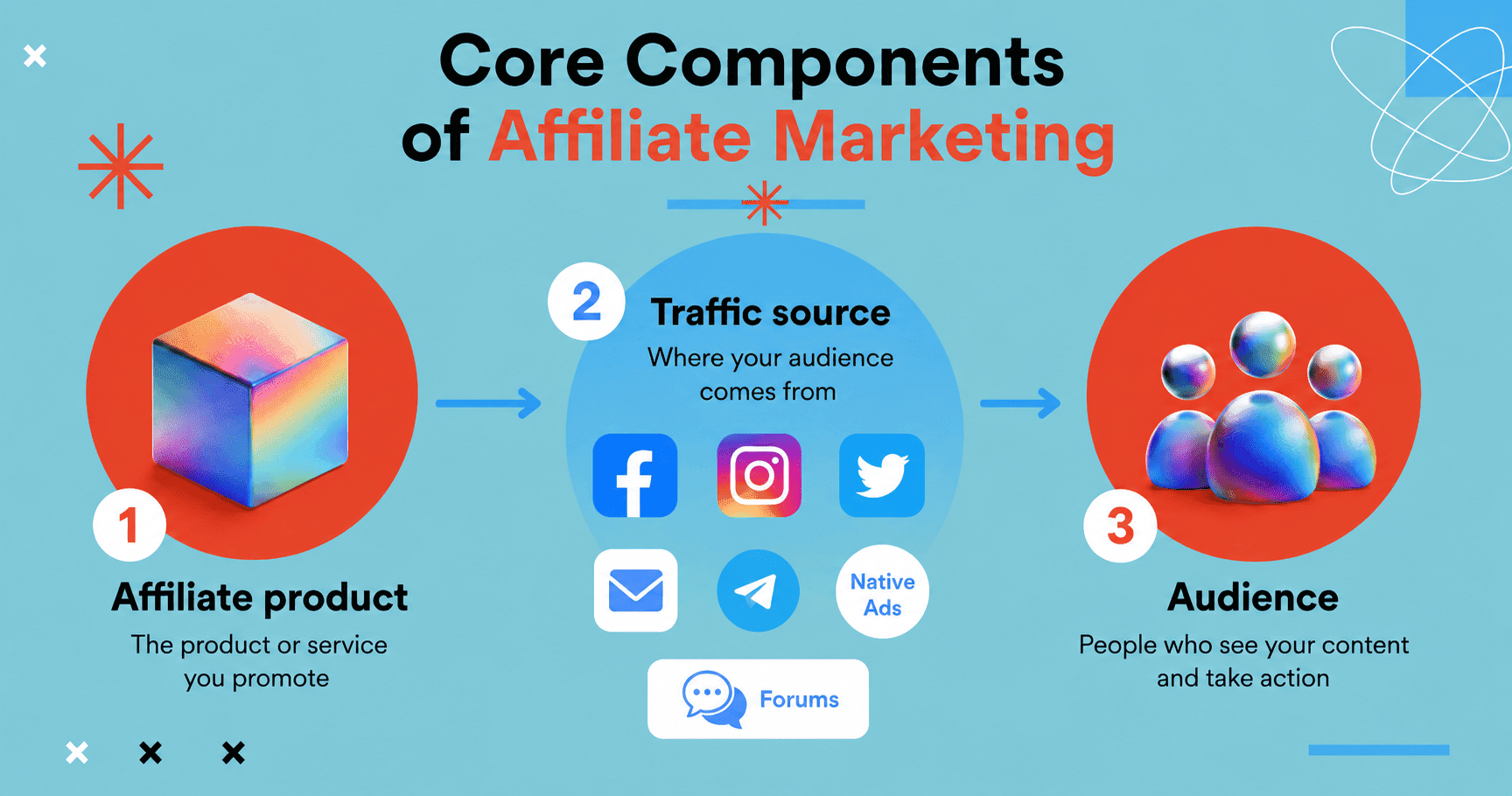
To make money from affiliate marketing, you only need three things: an affiliate product to promote, an audience to promote it to and a traffic source to connect the two. A website is none of those things.
In this guide, we'll walk you through the most effective channels you can use today, help you figure out which one fits your situation and show you how to get started.
What Does an Affiliate Marketer Actually Do?
At its core, affiliate marketing is pretty straightforward: you help a company sell its products and earn a commission for every sale you bring in. To make that work, you need three things:
- an affiliate product to sell and earn a commission from;
- an audience that's likely to want it;
- a traffic source to get your content or ads in front of them.
Notice again that a website isn't on that list. It never was. It's just one of many possible traffic sources, and a pretty demanding one at that: it takes time to build, maintain and grow. The good news is that there are faster and more flexible ways to get started.
Pro tip: If you're new to the industry, learn how to start affiliate marketing before exploring website-free traffic sources.
How to Do Affiliate Marketing Without a Website
A website isn't the only way to promote affiliate offers. Today, many affiliates use social platforms, communities, email lists and paid traffic sources to reach potential customers. The key is finding a channel where your target audience already spends time and where you can show up consistently.
Native Ad Networks
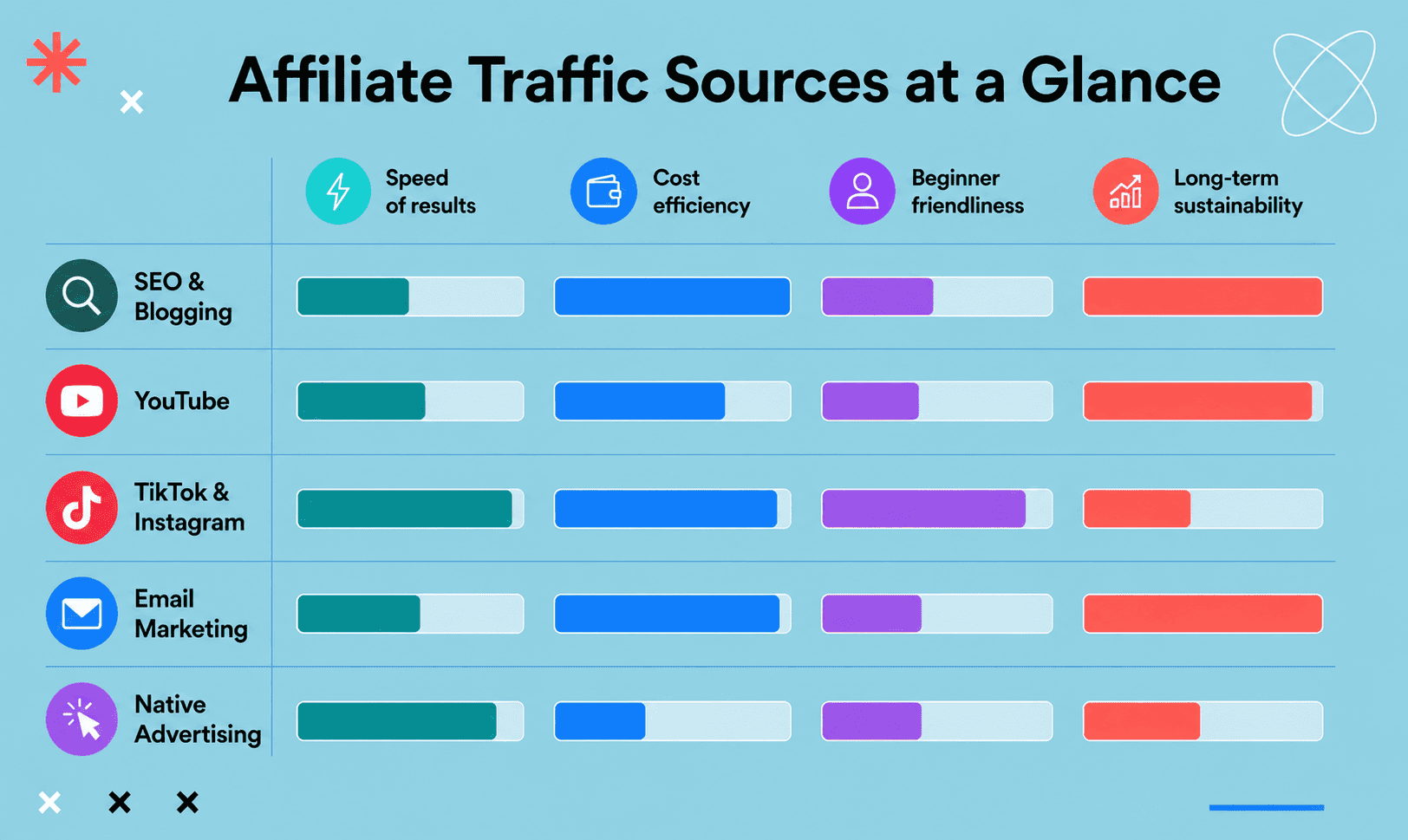
Native advertising lets you place affiliate offers in front of people who are already reading content related to your niche. Instead of building a website and waiting months for organic traffic to kick in, you can drive visitors directly through native ad placements on publisher websites.
Platforms like MGID give affiliates access to audiences across thousands of premium publisher sites, which makes native ads one of the fastest ways to start generating traffic from day one. It works best if you have a budget for paid promotion and want more control over targeting and results.
| Factor | Strength | Limitation |
|---|---|---|
| Cost | Can scale with different budgets | Requires ad spend from day one |
| Speed to start | Campaigns can go live quickly | You still need setup and testing |
| Traffic quality | Reaches relevant audiences | Results depend on optimization |
| Platform restrictions | Works across publisher inventory | Must follow ad and affiliate rules |
Social Media
TikTok, Instagram and YouTube Shorts have made it easier than ever to reach large audiences without owning a single web page. Short-form video in particular tends to perform well for affiliate content: product reviews, tutorials and honest comparisons all do a good job of building the kind of trust that turns viewers into buyers.
The catch is that real traction takes time. Growing an engaged audience doesn't happen overnight, and platform algorithms can be unpredictable. But if you're consistent and focus on genuinely helping people rather than just pushing products, social media can become a very reliable traffic source.
| Factor | Strength | Limitation |
|---|---|---|
| Cost | Free or low-cost to start | You pay with time and content effort |
| Speed to start | You can post immediately | Real traction takes time |
| Traffic quality | Can drive engaged traffic | Quality depends on audience fit |
| Platform restrictions | Huge built-in reach | Algorithms and link limits can hurt reach |
Email Marketing
Email might not be the flashiest channel but it consistently delivers some of the highest returns in digital marketing. Once someone joins your list, you have a direct line to them with no algorithm deciding whether your content gets seen or not.
Many email platforms offer free plans, so the barrier to entry is low. The main challenge is building a list in the first place, which usually means combining email with another channel early on. Once you have subscribers though, the focus shifts to sending content that's actually worth reading and recommending products that fit what they care about.
| Factor | Strength | Limitation |
|---|---|---|
| Cost | Cheap to run at the start | Tool costs can grow with your list |
| Speed to start | Easy to send your first email | You need subscribers first |
| Traffic quality | Very targeted traffic | List quality makes or breaks results |
| Platform restrictions | You control the channel | Must follow email compliance rules |
Telegram
Telegram channels and groups work surprisingly well for affiliate marketing, especially in niches like finance, tech, crypto, gaming and online business. The platform makes it easy to share links directly and communicate with your audience without the friction of social media algorithms getting in the way.
The key is to treat your channel like a resource. People follow Telegram channels because they expect useful updates: the moment it starts feeling like spam, they leave and don't come back.
| Factor | Strength | Limitation |
|---|---|---|
| Cost | Low cost to operate | Growth takes consistent effort |
| Speed to start | Quick to launch a channel | Audience building is slower |
| Traffic quality | Loyal and responsive audience | Reach is limited without promotion |
| Platform restrictions | Direct link sharing is easy | Still need to avoid spammy promotion |
Forums and Online Communities
Reddit, Quora, Discord and niche forums are full of people actively looking for answers, recommendations and product comparisons. That makes them a great place to find potential customers as long as you show up as a helpful contributor rather than someone dropping affiliate links and disappearing.
Building credibility in a community takes time, but the traffic it generates tends to be highly relevant. These are people who already know what they're looking for, which makes them much easier to convert than a cold audience.
| Factor | Strength | Limitation |
|---|---|---|
| Cost | Free to join and post | Needs time and real participation |
| Speed to start | You can start right away | Trust takes time to build |
| Traffic quality | Highly relevant niche users | Traffic volume is usually smaller |
| Platform restrictions | Strong niche targeting | Many communities limit self-promo |
Native Ads as a Website Alternative
For a long time, having a website felt like a non-negotiable part of affiliate marketing. The typical playbook looked something like this: build a blog, fill it with SEO content, wait for Google to send traffic and place affiliate links throughout. It works, but it can take months before you see any meaningful results, and maintaining a content site is a serious ongoing commitment.
Native advertising flips that model. Instead of creating content and hoping people find it, you put your offer in front of people who are already reading about topics related to your niche on publisher websites they already trust. There's no domain to register, no content calendar to manage and no waiting for organic rankings to build up.
Platforms like MGID handle the distribution side, connecting your ads with audiences across thousands of premium publisher sites. You can test different offers, adjust your targeting based on real performance data and scale what's working, all without owning a single page of content yourself.
This approach isn't for everyone. It requires a budget and some willingness to learn how to optimize campaigns.
But for affiliates who want to move faster or simply don't want to build a website, native advertising is one of the most practical paths available today.
Which Method is Best for You?
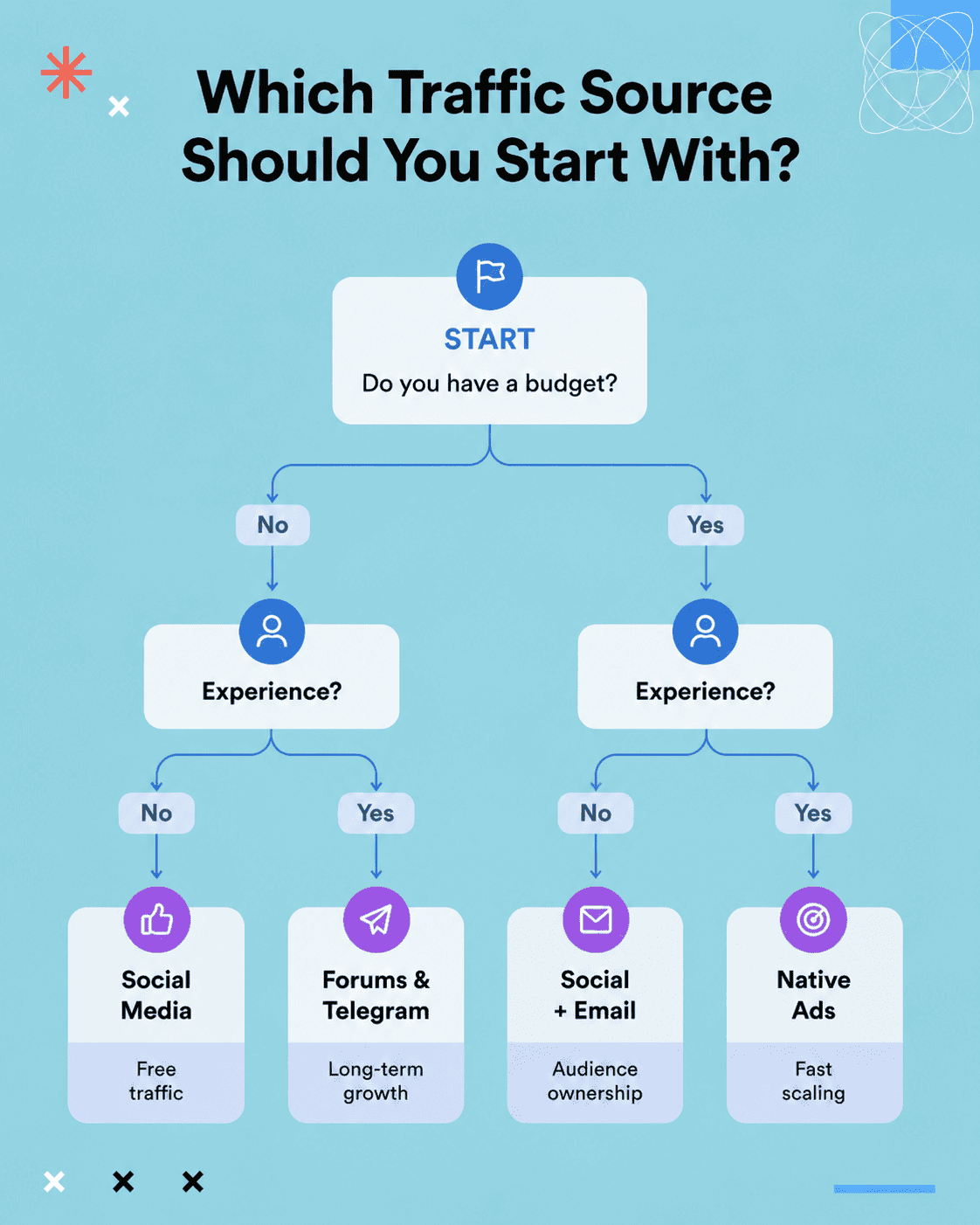
The honest answer is that the best channel depends on where you're starting from: your budget, how much time you can put in and how quickly you want to see results. Here's a simple way to think about it.
No budget yet?
Start with what's free. TikTok, Instagram and YouTube Shorts are great entry points because they have built-in audiences and don't cost anything to use. Forums and online communities like Reddit or Quora are also worth exploring: they take longer to pay off but the traffic tends to be very targeted. A Telegram channel can work well too, especially if your niche has an active enthusiast community.
Have a small budget to test?
Combine social media with email marketing to build an audience you actually own. A modest email list that you've grown yourself is worth more in the long run than a large social following that depends on an algorithm to reach.
Ready to scale?
If you have affiliate marketing experience and a budget to invest, native ad networks like MGID are worth exploring seriously. You can test multiple offers, collect real performance data quickly and scale the campaigns that work without building any content infrastructure yourself.
Want results as fast as possible?
Native advertising is typically the quickest way to start generating traffic and collecting performance data.
Focused on long-term growth?
Paid traffic through native advertising is typically the quickest way to start generating clicks and learning what converts. Free channels build slower but tend to create more durable audiences over time, so ideally you'd use both: paid to accelerate, organic to sustain.
Free vs. Paid Traffic: How to Choose
Once you've picked a channel, the next decision is whether to start with free traffic, paid traffic or a mix of both. Each approach has real tradeoffs and the right choice depends on what you're working with right now.
Can you do affiliate marketing without a website and without spending money? Absolutely. Many affiliates start with free traffic sources and later reinvest their earnings into paid campaigns to scale faster.
Free Traffic
Social media, Telegram, forums and email marketing once you've built a list costs you time rather than money. The upside is that you're building something that can generate traffic repeatedly over time. The downside is that results are slower and growth can be unpredictable depending on platform algorithms and engagement trends.
| Pros | Cons |
|---|---|
| Low barrier to entry. Most platforms are free to join and use. | Results take time. Building an audience and earning trust doesn't happen overnight. |
| Minimal financial risk. You can experiment without spending money on ads. | Growth can be unpredictable. Algorithms, engagement levels and platform trends can change. |
| Long-term audience building. You create assets and communities that can generate traffic repeatedly. | Requires consistent effort. Regular content creation and community engagement are essential. |
Paid Traffic
Native ad networks such as MGID lets you move faster. You can launch a campaign, collect performance data and start optimizing within days rather than months. The tradeoff is that you need a budget upfront and results aren't guaranteed until you've tested and refined your approach.
| Pros | Cons |
|---|---|
| Faster results. Campaigns can start generating traffic shortly after launch. | Requires an advertising budget. You'll need to invest before seeing returns. |
| Scalable growth. Successful campaigns can be expanded to reach larger audiences. | Optimization is necessary. Poor targeting or creatives can lead to wasted spend. |
| Advanced targeting options. You can reach specific audiences based on interests and behavior. | Performance isn't guaranteed. Results depend on your offer, targeting, and campaign setup. |
Many successful affiliates use both. Free channels help build trust and long-term audience relationships while paid traffic accelerates growth and lets you test new offers quickly.
If you're just starting out, there's nothing wrong with beginning on free channels and reinvesting your first earnings into paid campaigns when you're ready.
How to Make Money With Affiliate Marketing Without a Website
Regardless of where you decide to start, a few principles tend to separate affiliates who see results from those who don't:
- Diversify your channels early: Relying on a single platform is a real risk, because algorithms change, accounts get restricted and trends shift. Having more than one traffic source gives you stability.
- Use original content: Even if the affiliate program has pre-made content that you can use, your audience has probably seen that so many times already. Something genuine and specific to your niche will always perform better.
- Only recommend products that you believe in: If something turns out to be disappointing, the people who bought it on your recommendation will remember that, and so will you.
- Stay focused on a niche: A more specific focus makes your content more relatable and your recommendations more credible. It also makes it easier to build an audience that actually trusts you.
Want to take your affiliate campaigns further? We've gathered some of the tactics, lessons, and best practices that consistently work for affiliates across different niches. Explore our affiliate marketing tips and strategies to find ideas you can apply right away.
FAQ on Affiliate Marketing Without a Website
Can you do affiliate marketing without a website?
Yes, and plenty of people do it successfully. You can promote affiliate offers through social media, email marketing, Telegram, online communities and native ad networks. What matters is reaching the right audience.
What is the best platform for affiliate marketing without a website?
It depends on your goals and budget. TikTok, Instagram, YouTube Shorts, Telegram and forums are popular free options that work well if you're willing to invest time in building an audience. If you have a budget and want faster results, native ad networks like MGID are worth considering.
How do you start affiliate marketing for free without a website?
Join an affiliate program, pick a niche and start creating content on social media or participating in relevant online communities. Focus on being genuinely helpful rather than promotional: as your audience grows, you can start recommending affiliate products that match their interests.
How do you succeed in affiliate marketing without a website?
Consistency and trust matter more than the platform you choose. Focus on providing real value, promote products you actually believe in and don't rely on a single traffic source. Most successful affiliates treat it as a long-term project rather than a quick win.
Ready to Start Affiliate Marketing Without a Website?
Affiliate marketing without a website is genuinely accessible, but like anything worth doing, it rewards people who show up consistently and focus on building real value rather than chasing shortcuts. The channel you choose matters less than how well you understand your audience and how consistently you show up for them.
If you're still figuring out where to start, pick one channel from this guide, commit to it for a few months and see what you learn. Most successful affiliates didn't get it right on the first try, but they just kept testing until something clicked.
And if you'd like to try native advertising as your traffic source, MGID gives you access to audiences across thousands of premium publisher sites, along with targeting tools, creative support and a personal manager to help you get your first campaigns off the ground. Create an account and see what's possible.